


How to improve perimenopause sleep naturally with gentle habits

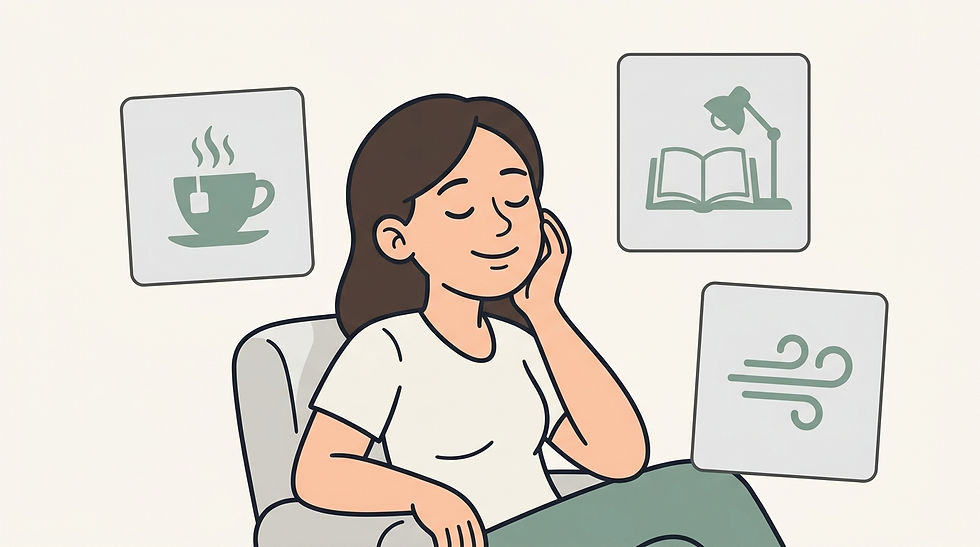
Sleep used to be simple. You'd get into bed, close your eyes, and wake up rested. But somewhere in your forties, something shifted. Now you might find yourself staring at the ceiling at 2am, kicking off the covers at 3am, or waking at 5am with your mind already racing through the day's tasks.
If this sounds familiar, you're not alone. Research published in Nature and Science of Sleep found that between 40% and 56% of perimenopausal women experience sleep difficulties, with 26% reporting severe symptoms that meet the criteria for insomnia. It's not "just stress" and it's not something you simply have to endure.
At Daymark, we believe women don't need more pressure disguised as wellness. They need relief. They need practical, grounded support that acknowledges how frustrating sleep struggles are while offering gentle paths forward. This guide shares what we've learned about restoring rest during perimenopause without adding another demanding routine to your already full life.

Create a sleep environment that supports restoration
Your bedroom should signal to your body that it's safe to rest. During perimenopause, this means paying particular attention to temperature, light, and comfort.
Cool your space. Because estrogen helps regulate body temperature, many women experience night sweats or feel overheated even when the room seems fine to others. Research suggests keeping your bedroom between 60 and 67 degrees Fahrenheit. One study found that cooler rooms can increase sleep efficiency by as much as 25%. If you can't control the thermostat, consider a bedside fan, cooling pillows, or moisture-wicking sheets made from cotton or linen rather than synthetic materials.
Manage light exposure. Light, especially blue light from screens, suppresses melatonin production. Try to dim lights an hour before bed, use blackout curtains if street light intrudes, and keep phones and tablets out of the bedroom or at least across the room. Equally important: get morning sunlight soon after waking. This helps set your circadian rhythm and makes it easier to fall asleep at night.
Reserve your bedroom for rest. If possible, avoid working, scrolling, or watching TV in bed. Your brain should associate this space with sleep and relaxation, not stimulation or stress.
You don't need to overhaul everything at once. Try one change this week and notice how it feels.
Build a wind-down ritual that signals safety
Racing thoughts are one of the most common complaints we hear from women in perimenopause. The body may be tired, but the mind won't quiet down. A consistent wind-down ritual helps communicate to your nervous system that it's safe to let go of the day.
Start about 60 to 90 minutes before you want to be asleep. This isn't about adding pressure. It's about creating a gentle transition.

Dim the lights and disconnect. Turn off screens or switch to night mode. The blue light from phones and computers interferes with melatonin production, but there's another factor too: the content. Scrolling through news, emails, or social media activates your brain when you're trying to do the opposite.
Engage your body in relaxation. Gentle stretching, restorative yoga poses like legs-up-the-wall, or a warm bath can help release physical tension. These aren't workouts. They're invitations to soften.
Try herbal support. Chamomile, lemon balm, and passionflower teas have been used for centuries to promote relaxation. Modern research supports what traditional medicine has long known. One study found that participants who consumed herbal blends reported improved sleep quality.
Consider a small, intentional snack. We created our Sleep Bites for exactly this moment. They're a chocolatey bedtime snack made with ingredients that support your body's natural wind-down: magnesium glycinate to relax muscles and calm the nervous system, L-theanine to quiet racing thoughts, tart cherry as a natural source of melatonin, and valerian root and ashwagandha for their calming properties. Having something warm and nourishing as part of your ritual can become a tangible signal that the day is ending.
Do a "brain dump." If your mind races with tomorrow's to-do list, keep a notebook by your bed. Write everything down, close the notebook, and give yourself permission to let it go until morning.
There's no perfect wind-down routine. Some nights you'll have more time than others. The goal isn't consistency in the details. It's consistency in the intention: creating a buffer between the demands of the day and the restoration of sleep.
Navigate the 3am wake-up with compassion
Waking up at 3am is so common during perimenopause that it's almost a cliché, but that doesn't make it any less frustrating when it happens to you. There's actually a physiological explanation. The "cortisol awakening response" can trigger a surge of stress hormones in the early morning hours. Combined with blood sugar drops that naturally occur overnight, your body can shift from sleep to alertness without your consent.
When you find yourself awake in the middle of the night, what you do next matters.
Don't check your phone. The light will suppress melatonin further, and the content (even seemingly benign content) activates your brain. Don't calculate how many hours of sleep you're losing or panic about being tired tomorrow. This only increases cortisol and makes it harder to fall back asleep.
Try a breathing technique instead. The 4-7-8 method (inhale for 4 counts, hold for 7, exhale for 8) activates your parasympathetic nervous system. Box breathing (equal counts of inhale, hold, exhale, hold) can also be effective. These aren't just relaxation tricks. They actually shift your physiology toward rest.
If you're truly awake, get up briefly. Keep lights dim and do something low-stimulation: sit in another room, read a few pages of a book you've already read, or do gentle stretching. Return to bed when you feel sleepy again.
Consider prevention. A small snack before bed that combines protein and complex carbohydrates (like almond butter on a small piece of toast or a few nuts with a date) can help stabilize blood sugar overnight and reduce those early morning wake-ups.
Most importantly, be gentle with yourself. One rough night doesn't undo your progress, and worrying about sleep is itself a form of wakefulness.
Support your sleep through daytime choices
Sleep isn't just a nighttime activity. What you do during the day sets the stage for how you rest at night. This is where our Day/Night framework comes in: supporting steady energy by day creates the conditions for genuine restoration at night.
Get morning light. Exposure to natural light within an hour of waking helps anchor your circadian rhythm. Even ten minutes outside can make a difference.
Move your body, but time it well. Regular physical activity improves sleep quality and can reduce stress. A meta-analysis found that exercise dramatically lessens insomnia in perimenopausal women. However, vigorous workouts too close to bedtime can be energizing rather than relaxing. If possible, complete intense exercise at least three hours before sleep. Gentle movement like evening yoga or stretching is fine later in the day.
Mind your caffeine timing. Many women find they become more sensitive to caffeine during perimenopause. Consider cutting off caffeine by noon, or even earlier if you're sensitive. Remember, cortisol is already elevated during this life stage, so your body may not need the extra stimulation.
Be honest about alcohol. That glass of wine might help you fall asleep initially, but alcohol fragments sleep later in the night. Studies show it can reduce overall sleep quality by 30%. If you choose to drink, try to finish at least three hours before bed.
Manage stress throughout the day. The cortisol that keeps you awake at 3am often builds up during the day. Brief walks, moments of pause, boundary-setting with your time, and practices like mindfulness can all help keep evening cortisol levels lower. As Dr. Anna Garrett notes, learning to say "no" is a complete sentence, and your body will thank you for it.
Finding your personal rhythm of rest
There's no perfect sleep hygiene formula that works for everyone. Your body, your schedule, your living situation, and your specific hormonal landscape are unique. What matters is finding what works for you and giving yourself permission to prioritize rest without demanding perfection.
Start with one small shift. Maybe it's cooling your bedroom. Maybe it's a ten-minute wind-down ritual. Maybe it's our Sleep Bites as a gentle evening snack. Try something for a week and notice how it feels. If it helps, keep it. If it doesn't, try something else. This is an experiment, not a test you can fail.
There are times when professional support makes sense. If sleep problems persist for more than a few weeks despite lifestyle adjustments, or if you're experiencing loud snoring, gasping during sleep, severe mood changes, or excessive daytime sleepiness that affects your safety, consider speaking with a healthcare provider. The National Institute on Aging recommends asking about cognitive behavioral therapy for insomnia (CBT-I), which has been shown to help improve sleep in women with menopausal symptoms.
At Daymark, we offer coaching for women navigating perimenopause who want personalized guidance. Sometimes it helps to have someone walk beside you as you figure out what your body needs during this transition.
Rest is possible. You don't have to earn it through perfect adherence to a routine, and you don't have to accept sleep deprivation as an inevitable part of aging. Your body is capable of deep, restorative sleep. Sometimes it just needs a little gentle support remembering how.
Frequently Asked Questions
What helps with perimenopause sleeplessness when you want to improve perimenopause sleep naturally with gentle habits?
The most effective approaches combine environmental changes (cooler bedroom, light management), consistent wind-down rituals, stress management throughout the day, and targeted supplements like magnesium glycinate or L-theanine. The key is consistency with small changes rather than attempting a complete lifestyle overhaul.
How long does it take to see results when trying to improve perimenopause sleep naturally with gentle habits?
Most women notice some improvement within one to two weeks of consistent changes, but significant shifts in sleep patterns often take three to four weeks. Your body is adapting to hormonal changes, so patience with the process matters. Track your sleep quality rather than just hours to notice subtle improvements.
Can you improve perimenopause sleep naturally with gentle habits if you've had insomnia for years?
Yes, though it may take longer and require a more comprehensive approach. Chronic insomnia often benefits from cognitive behavioral therapy for insomnia (CBT-I), which addresses the thought patterns and behaviors that perpetuate sleeplessness. Natural approaches can work alongside professional treatment.
What's the best way to improve perimenopause sleep naturally with gentle habits when you share a bed with a partner?
Communication helps. Explain that your sleep needs may be different right now. Consider solutions like separate blankets (so you can kick yours off without disturbing them), a bedside fan directed at your side, or even temporarily sleeping in separate beds if night sweats are severe. Many couples find that prioritizing sleep quality actually improves their relationship.
Are there any risks to trying to improve perimenopause sleep naturally with gentle habits alongside prescribed medications?
Some natural supplements can interact with medications. For example, valerian root and ashwagandha may enhance the effects of sedatives. Magnesium can interact with certain antibiotics and blood pressure medications. Always check with your healthcare provider before adding supplements, especially if you're taking prescription sleep aids or hormone therapy.
When should you see a doctor instead of trying to improve perimenopause sleep naturally with gentle habits?
Seek medical guidance if you experience persistent insomnia (more than three weeks), loud snoring or gasping during sleep (possible sleep apnea), severe mood changes affecting daily functioning, or excessive daytime sleepiness that impacts your safety. These may indicate underlying conditions that require professional treatment.
Can you improve perimenopause sleep naturally with gentle habits during other life stressors like caring for aging parents or work demands?
Absolutely, and this is exactly when sleep matters most. The key is choosing gentle habits that fit your current reality rather than adding pressure. Even five minutes of wind-down time, a cooler bedroom, and one small supportive habit (like Sleep Bites or herbal tea) can help. Perfection isn't the goal. Small moments of care are.


Comments